
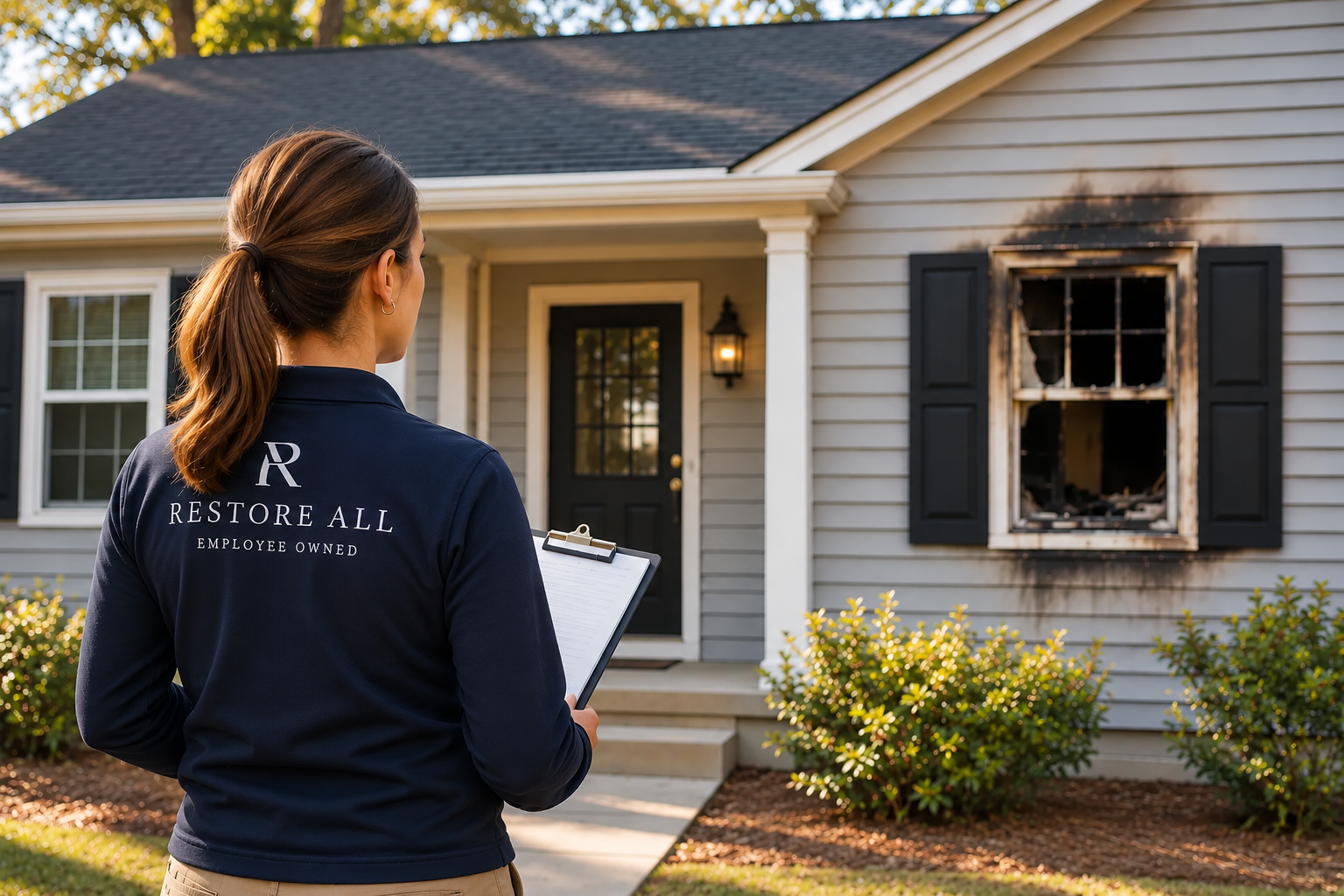
Thanksgiving is the single worst day of the year for home cooking fires in the United States. The National Fire Protection Association (NFPA) estimates that 1,139 home cooking fires were reported to U.S. fire departments on Thanksgiving Day 2024, 321 percent above the daily average, and unattended cooking is the leading cause. Most of these fires are preventable. If one does start, how you respond in the first few minutes, and in the hours after, decides how much of your kitchen and home you can save.
This guide covers both: how to keep Thanksgiving Day fire-free, and what to do if a pan, oven or turkey fryer gets away from you, including when to call for Thanksgiving fire damage restoration in Marietta. Restore All has handled more than 2,500 restoration jobs across Marietta and the Atlanta metro.
Why Thanksgiving is the peak day for cooking fires
It comes down to volume and distraction. On most days, one person cooks one or two dishes. On Thanksgiving, the oven runs for hours, every burner is in use, the kitchen is full of people, and the cook is answering the door, watching the game and keeping kids and pets out from underfoot. NFPA data shows cooking causes about 80 percent of home fires on Thanksgiving Day. Christmas Day and Christmas Eve follow as the next highest days, so the advice below applies through the whole holiday season.
How to prevent a Thanksgiving kitchen fire
Stay in the kitchen while anything is on the stovetop. Frying, sautéing and boiling need constant attention. If you have to step away, turn the burner off.
Check the turkey regularly. If the turkey is roasting or anything is simmering or baking, stay in the house and set a timer so you don't lose track of it.
Keep a three-foot clear zone around the stove. Keep kids and pets out of it, along with towels, oven mitts, paper packaging and recipe cards.
Clean the oven and stovetop before the big day. Grease and food buildup from the rest of the year can ignite under long, high-heat cooking.
Keep a lid and a baking sheet within reach. They are the fastest way to smother a pan fire.
Test your smoke alarms. Make sure there is one near the kitchen and on every level of the home.
Have a fire extinguisher and know how to use it. A multipurpose (ABC) extinguisher works on grease and electrical fires. Keep it near the kitchen exit, not right next to the stove.
Roll up your sleeves. Loose clothing can catch fire over a gas flame or hot burner.
A note on turkey fryers
The NFPA discourages turkey fryers that use cooking oil because they can cause severe burns. It recommends an air fryer, electric fryer or infrared fryer instead, or buying a fried turkey from a grocery store or restaurant. Oil fryers use several gallons of oil at high temperatures, and an overfilled pot or a partially frozen turkey can cause oil to spill onto the burner and ignite. If you fry with oil anyway, do it outside on a flat surface well away from the house, deck, garage and trees. Thaw and dry the turkey completely, don't overfill the pot, and never leave the fryer unattended. A fryer on a wooden deck or inside a garage is how a cooking fire becomes a structure fire.
What to do if a fire starts in your kitchen
If the fire is small and contained, you may be able to put it out safely. If it is spreading, or you have any doubt, get everyone out, close the door behind you and call 911 from outside.
Grease fire in a pan: Turn off the burner. Slide a lid or baking sheet over the pan and leave it covered until it cools. Never pour water on a grease fire, and never try to carry the pan outside.
Oven fire: Turn off the oven and keep the door closed. Opening it feeds the fire oxygen.
Microwave fire: Keep the door closed and unplug it if you can reach the cord safely.
Turkey fryer fire: Shut off the gas at the tank if it is safe, keep everyone back, and call 911. Do not use water.
Even after a small fire is out, call the fire department if you're unsure whether it spread into the cabinets, walls or range hood. Fire can smolder behind surfaces you can't see.
After the fire: Why a "small" kitchen fire still needs professional cleanup
Many homeowners put out a stovetop fire, open the windows and assume the worst is over. Kitchen fires leave behind more damage than they appear to:
Grease-based soot. Kitchen fires produce oily, sticky residue that spreads across cabinets, ceilings and walls. Household cleaners usually smear it deeper.
Smoke in other rooms. Smoke travels through the house and into the HVAC system, carpets, upholstery and clothing, well beyond the kitchen.
Acidic residue. Soot is acidic and starts discoloring and corroding surfaces, metal fixtures and appliances within days.
Water and extinguisher damage. If firefighters responded, or you used an extinguisher, there may be water in the subfloor or chemical powder throughout the kitchen. Wet materials can begin growing mold within 24 to 48 hours. (See our water damage restoration page.)
Hidden heat damage. Fire behind the range or in the hood vent can damage wiring and framing that need inspection.
Your first steps after a kitchen fire
Wait for the fire department to say the home is safe before going back in.
Don't turn on the HVAC system. It can pull soot into every room.
Throw out food, spices and medicine that were exposed to heat or smoke.
Take photos of the damage for your insurance claim.
Call your insurance company to report the loss.
Call a fire damage restoration company before soot and moisture cause more damage.
Kitchen fire cleanup in Atlanta and Marietta: How it works
A kitchen fire follows the same restoration process as a larger fire, on a smaller scale. A Restore All crew will:
Secure the area and assess how far fire, smoke and water spread.
Remove water and dry the structure if firefighting or an extinguisher left moisture behind.
Clean grease soot from cabinets, walls, ceilings and appliances using methods matched to each material.
Run HEPA air scrubbers and treat smoke odor at the source.
Clean or replace damaged contents, from dishes to window treatments.
Rebuild what can't be saved, including cabinets, countertops, drywall and flooring, through our in-house construction buildback team.
The typical cleanup timeframe for a kitchen fire depends on the extent of the damage. A small stovetop fire with smoke contained to the kitchen may take a few days to about a week to clean up. If smoke has spread throughout the home, cleanup typically takes one to three weeks. More extensive fires that damage cabinets, walls, or structural elements can take several weeks to a few months, including the rebuilding process.
Because our team is Xactimate certified, we document the damage and build the estimate in the same software most insurance adjusters use, which helps keep your claim moving.
Thanksgiving fires in apartments and multifamily properties
In an apartment community, one unit's kitchen fire rarely stays one unit's problem. Smoke moves through shared walls, attics and hallways, sprinklers and fire hoses send water into the units below, and several households can be displaced at once. For property managers in Marietta and across the Atlanta metro, a fast, organized response limits both the damage and the disruption to residents.
Secure the building first. Board up the fire unit and any damaged neighboring units, and keep residents out until the fire department and a restoration crew confirm it is safe.
Check the units around the fire. Inspect the units above, below and next door for smoke and water damage, even if they look fine. Soot and smoke odor often show up in neighboring units days later.
Dry out sprinkler and firefighting water quickly. Water in ceilings and wall cavities can lead to mold in units the fire never reached.
Keep residents informed. Tell affected tenants what happened, which units are closed and when to expect updates, and document everything for the insurance claim.
Work with one restoration partner. Restore All handles multifamily fire and water damage from mitigation through rebuild, so the property manager has one point of contact for every affected unit.
Frequently Asked Questions
-
Unattended cooking. According to the NFPA, it is the leading contributing factor in home cooking fires and cooking fire deaths.
-
No. Water makes burning oil splatter and can spread the fire across the kitchen. Turn off the heat and smother the pan with a lid or baking sheet.
-
In most cases, yes. Standard homeowners policies typically cover accidental fire damage, including smoke damage and cleanup, up to your policy limits. Check the details with your agent or adjuster.
-
Light surface residue on a small area may come off, but grease soot is hard to remove without smearing it, and smoke odor gets into porous materials and ductwork. Professional cleaning usually saves more of your cabinets and belongings.
-
Yes. Restore All answers the phone 24 hours a day, 365 days a year, with no hold music, across Marietta, Cobb County and the greater Atlanta metro.
Get help after a kitchen fire in Marietta or Atlanta
If a holiday cooking fire damages your home, business or rental property, Restore All handles the full job, from smoke and soot cleanup to rebuilding the kitchen, and works with your insurance company along the way. Visit our fire damage restoration services page, call 770-852-1240 or contact us online.